16.01.2006, Epoch Times
1.The Assembly refers to its Resolution 1096 (1996) on measures to dismantle communist totalitarian systems.
2. The totalitarian communist regimes which ruled in Central and Eastern Europe in the last century, and which are still in power in several countries in the world, have been, without exception, characterised by the massive violation of human rights. The violations have differed depending on the culture, country and the historical period, and have included individual and collective assassinations and executions, death in concentration camps, starvation, deportations, torture, slave labour and other forms of mass physical terror.
3. The crimes were justified in the name of the class struggle theory and the principle of dictatorship of the proletariat. The interpretation of both principles legitimised the "elimination” of people who were considered harmful to the construction of a new society and, as such, enemies of the totalitarian communist regimes. A vast number of victims in every country concerned were its own nationals. It was the case particularly of peoples of the former USSR who by far outnumbered other peoples in terms of number of victims.
4. The Assembly recognises that in spite of the crimes of totalitarian communist regimes, some European communist parties have made contributions to achieving democracy.
5. The fall of totalitarian communist regimes in Central and Eastern Europe has not been followed in all cases by an international investigation on the crimes committed by them. Moreover, the authors of these crimes have not been brought to trail by the international community as was the case with the horrible crimes committed in the name of National Socialism (Nazism).
6. Consequently, public awareness of crimes committed by totalitarian communist regimes is very poor. Communist parties are legal and active in some countries, even if in some cases they have not distanced themselves from the crimes committed by totalitarian communist regimes in the past.
Vydávání Monitoru je financováno výhradně z dobrovolných darů Vás, čtenářů. Budeme vděční, pokud se rozhodnete Monitor podpořit darem, abychom mohli v této službě pokračovat.
7. The Assembly is convinced that the awareness of history is one of the preconditions to avoiding similar crimes in the future. Furthermore, moral assessment and condemnation of crimes committed play an important role in the education of young generations. The clear position of the international community on the past may be a reference for their future actions.
8. Moreover, the Assembly believes those victims of crimes committed by totalitarian communist regimes who are still alive or their families deserve sympathy, understanding and recognition for their sufferings.
9. Totalitarian communist regimes are still active in some countries of the world and crimes continue to be committed. National interests perception should not prevent countries from adequate criticism of present totalitarian communist regimes. The Assembly strongly condemns all violations of human rights.
10. The debates and condemnations which have taken place so far at national level in some Council of Europe member states, cannot give dispensation to the international community from taking a clear position on the crimes committed by the totalitarian communist regimes. It has a moral obligations to do so without any further delay.
11. The Council of Europe is well placed for such a debate at international level. All former European communist countries, with the exception of Belarus, are now its members, and the protection of human rights and the rule of law are basic values for which it stands.
12. Therefore, the Parliamentary Assembly strongly condemns the massive human rights violations committed by the totalitarian communist regimes and expresses sympathy, understaning and recognition to the victims of crimes.
13. Furthermore, it calls on all communist or post-communist parties in its member states which have not so far done so, to reassess the history of communism and their own past, clearly distance themselves from the crimes committed by totalitarian communist regimes and condemn them without any ambiguity.
14. The Assembly believes that this clear position of the international community will pave the way to further reconciliation. Furthermore, it will hopefully encourage historians throughout the world to continue their research aimed at the determination and objective verification of what took place.
II. Draft Recommendation
1. The Parliamentary Assembly refers to its Resolution 1096 (1996) on measures to dismantle communist totalitarian systems, and to Resolution ... on the need for international condemnation of crimes of totalitarian communist regimes.
2. The Assembly is of the opinion that there is an urgent need for an in-depth and exhaustive international debate on the crimes committed by totalitarian communist regimes with a view to giving sympathy, understaning and recognition to all those affected by these crimes.
3. It is convinced that the Council of Europe, being an organisation which stands for the rule of law and protection of the human rights, should take a clear position on the crimes committed by the communist regimes.
4. Therefore, the Assembly urges the Committee of Ministers:
23.10.2026, RC Monitor 19/2026
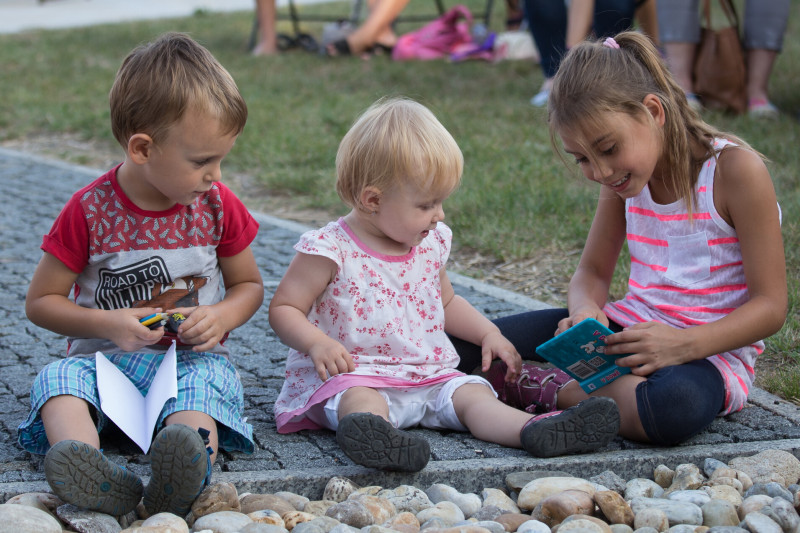
Občas se dívám na televizi, hlavně pozdě večer, když nemůžu spát, ale není to moudrý zvyk. Filmy nebo seriály jsou prošpikovány reklamami, které trvají tak dlouho, že zapomenete, na co jste se dívali. Jediné, co z tohoto zlozvyku dobrého vyplývá, že mohu, jak se dříve říkávalo, držet prst na tepu doby. Výmluvné jsou hlavně reklamy, kde účinkují děti.
21.10.2026, RC Monitor 19/2026
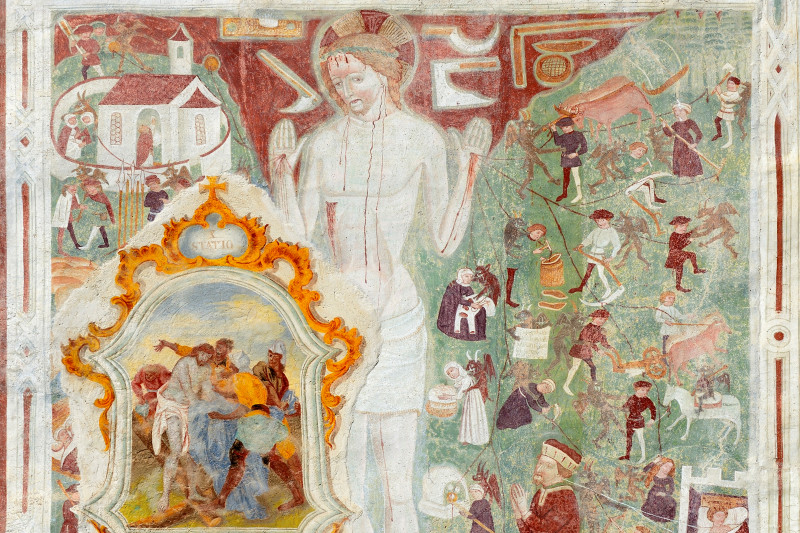
Kniha Genesis praví, že Hospodin přivedl k člověku všechna zvířata, aby viděl, jak je nazve. (Gn 2,19–20)
19.10.2026, RC Monitor 19/2026
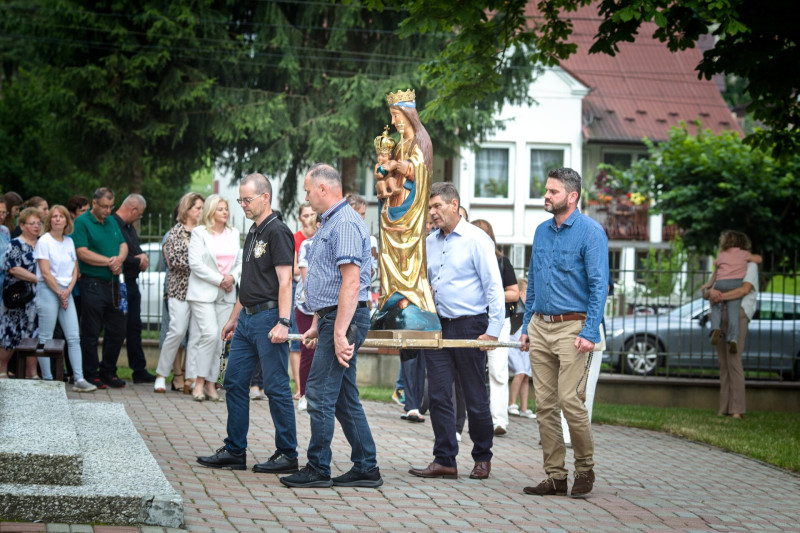
Začnu příběhem, který se skutečně odehrál při jednání katolické pastorační rady. Jeden farník v nejmenované farnosti navrhl uspořádat mariánské říjnové pobožnosti. Dříve bylo zvykem konat je každý den, nicméně jeho návrh byl daleko skromnější. Šlo by pouze o čtyři pobožnosti – každou neděli jedna. Struktura by byla jednoduchá a tradiční: mariánská píseň, růženec, litanie a mariánská píseň. Když se onen farník zeptal, jak na tento návrh pohlíží farní rada, dočkal se odpovědi: „Velmi pesimisticky!“
Články e-mailem
Nové články přímo
do vaší e-mailové schránky
Čtrnáctideník Monitor
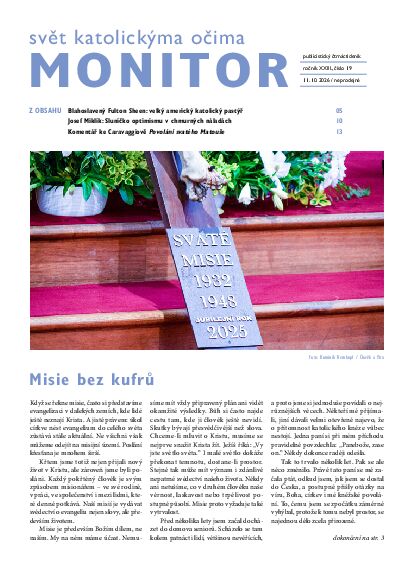
Tištěný publicistický čtrnáctideník Monitor bude ve vaší poštovní schránce každý druhý pátek. Zasílání je bezplatné a je hrazené výhradně z darů čtenářů.