20.10.2004, TK KBS
Mr. Alvaro: One minute is not long enough to find out about your position and your work - General impression - Top priority? instruments intend to use to implement your policies - under what circumstances you would consider resigning - What factors do you take into account in your decision making and how does your close relationship with the US and the Vatican relations affect your decisions?
Buttiglione: First priority: to consolidate the subjective priorities of the Commission i.e. cooperate all time with EP, and working with the parliament. Top priority. Everything else depends on this. Resign: if President Barroso were to require it, in the interest of the European project, I would resign immediately. I am friend of the US but I am not American. I have had difference with the US as all Europeans have had. We must work with the US. I believe that Europe has to live in a transatlantic community but there has to be two pillars of it, Europe being a full pillar. We have to be prepared to work with Americans as equal partners on the future of the world with joint responsibilities for the future of humanity. On the Vatican, there is no secret that I am a catholic, but that has not much to do with the Vatican but with my own faith, with my personal convictions, and I think a person can be a good catholic and a good European at the same time. Otherwise the great Europeans would count either Adenauer, or De Gasperi, Schuman or Helmut Kohl.
Mrs. Buitenweg: Mr Buttiglione, some of your opinions are in direct contradiction of European law. For example, the discrimination on grounds on sexual orientation is prohibited and you have said that homosexuality is a sin and the sign of moral disorder. I d like to know from you how it is that we should expect you to fight for those things and could you give us a specific example of how you want to obtain your objective?
Buttiglione: I shall remind an old and perhaps not completely unknown philosopher, a certain Emmanuel Kant, from Koenigsberg who made a clear cutting distinction between morality and law. Many things may be considered to be immoral, that should not be prohibited. When we make politics we do not renounce to the right of having more convictions and I may think that homosexuality is a sin and this has no effect on politics unless I say that homosexuality is a crime. In the same way you are free to think that I am a sinner on most things of life and this does not have any effect on our relations as citizens. So I would say that I would consider it to be an inadequate consideration of the problem to pretend that everybody agrees on moral matters. We can build a community of citizens even if on some moral matters we have different opinions. The issue is rather non discrimination. The state has no right to stick its nose in those things and nobody can be discriminated on the basis of sexual orientation or any gender orientation. This stands in the Charter of Fundamental rights, this stands in the Constitution, and I have pledged to defend this constitution.
Vydávání Monitoru je financováno výhradně z dobrovolných darů Vás, čtenářů. Budeme vděční, pokud se rozhodnete Monitor podpořit darem, abychom mohli v této službě pokračovat.
M. Pek: Thank you chairman and I do hope that this is something that will be normal hence fore in this committee. My first question is an easy one and a pleasant one: do you believe that marriage is an union between a man and a woman or is it something else? My second question is a bit more tricky: at present the European superstate being built through the constitution, is it something that is being built on human rights which is forced on it by a minority. It that a firm foundation for a Europe of the future or do we need something rather more timeless that binds us as had been the case in the past history of humanity?
Buttiglione: First of all I must say that I am very happy to hear the polish language here in the European parliament. It was the dream of a whole polish generation that has struggled for freedom and for Europe. And I have had the privilege of being in contact with this generation and I am very happy to hear today a polish voice in this parliament. My personal opinion on marriage is well known. The word "marriage" comes from the latin "matrimonium" which means protection of the mother and so the family exist in order to allow women to have children and to have the protection of a male who takes care of them and this is the traditional vision of marriage that I defend. I don t think this to be fairly relevant in this area because the definition of marriage falls within the competence of member states. So whether I think this way or whether I think in another way, this has no practical impact. By the way this is the view that is accepted in 22 out of 25 member states today. It is no a matter of the union, it should not become a matter of the union, it is a matter of the member states It must remain a matter of the member states, according to the principle of subsidiarity. So it is a matter of philosophical but not of political discussion. As what regards the Constitution I think this constitution is based on Human rights it is based on the rights of the human person. And I think this to correspond to the best European tradition. I would not endorse the judgement that this is a kind of betrayal of the great European tradition. There is a line moving from Socrates to Christianity, to enlightments, and arriving to the point to which we are today.
Michael Cashman: Vice President designate, I have to say that some of the statements you have made about homosexuality cause me deep concern but let s not judge you by words but by actions. You said earlier to Mrs Buitenweg that the State has no right to stick its nose in relations to issues regarding sexual orientation. How can you therefore explain your actions in putting down an amendment to the convention that wrote the charter of fundamental rights that sought to remove sexual orientation from the grounds of non discrimination?
Buttiglione: It is clearly an amendment that says that when we define the principle of non discrimination, this principle is not applied only to a limited set of cases, those that are enumerated, This principle is expansive, that should be applied to different cases and I did not think that it was strengthened to the mention in particular of homosexuals. But in any case, this belongs to a discussion that was closed. I do not doubt that if you had written the constitution alone, you would have written a different constitution or a different charter of human rights. And if I had written the charter of human rights or the constitution alone, I would have written a different charter and a different constitution. But this is the constitution that we have written together And this is the constitution which binds together all of us and this is the constitution with which I am willing to live and this is the constitution and the charter of rights I am willing to defend.
Michael Cashman: Vice President designate, this is extremely important because we have to judge you by your actions. You said on one hand that you believe that the State should not intervene on grounds of non discrimination against homosexuals. But you sought to specifically remove that ground specifically that ground. So therefore we have a charter of fundamental rights which you would not uphold.
Buttiglione: I must most emphatically deny. I clearly said that this is the charter that we have made together and this is the charter that I shall defend and that I am willing to defend. As what regards the reasons why I made that amendment I explained those reasons. You may be in agreement with my reasons or not but I think that my answer was clear.
In T Veld: Commissioner designate, here we are not interested simply at your suitability as a commissioner but whether you are suitable for your particular area of competence. Now you have made some comments about women and homosexuality and you have given your personal view which you have said would not affect your political activity. But then I am extremely surprised that you were co-signatory to legislation or refused to sign certain points of law in Italy which were not appropriate for you. So you cannot say that the constitutional laws for fundamental rights will protect us right. That is not enough. As a Commissioner you must be pro active and must yourself attempt to develop a proper body of law. Do you have any specific plans over the next five years to strengthen the role of women and to promote protection of homosexuals. We would like to see whether there will be five years of progress or five years of impasse.
Buttiglione: I am against discrimination, I think that all humans must enjoy the same rights whether they are homosexual or heterosexual or whatever else. If whatever else can be thought of. And I am engaged in defending the rights of all European citizens, included the right to non discrimination. You want me to be proactive, I am not sure I really understand what you mean with proactive. I think the rights of homosexuals should be defended on the same basis as the rights of all other European citizens. If there are specific problems regarding homosexuals, I am ready to consider these specific problems. If you tell me for instance that there is a particular concentration of violence against homosexuals, then I am ready to consider the hypothesis of specific legislation in order to protect against this violence homosexuals and in order to give better guarantee to the right to equality. But I would not accept the idea that homosexuals are a category apart and that the defence of their rights should take place on a basis that is different of all European citizens at large. So I am pro-active for European citizens.
A little bit different is the question of women. I think we should have specific projects regarding women. I am worried about the fact that too few children are born in Europe. That is one of a major European problem that stands in front of us And I think we all should make reflections on the living condition of women with a man perhaps, of woman today, too much without giving adequate support. This is an issue that I am wishing to raise.
Mr Bourlanges: Thank you. You were talking about defending homosexuals on a different basis and you gave your views with regards to that. Now what do you mean regarding what sort of attitude would you be against?
Buttiglione: I would defend the charter i.e. the principle of non discrimination meaning that it is not permissible to have any discrimination on the basis of sexual orientation in any sphere of life all European citizens should have equal rights to all European citizens.
Mrs Kosane Kovacs: Commissioner Designate, Europe is multicultural and will become more and more so. So I would like to ask whether you see any moral distinction in the belonging to different religions or the relationships between believers and non believers. On other areas with a higher or a lower level all have equal rights do you mean that we should have equal rights to discriminate against one another, to talk in discriminatory terms against the Roma group or to speak against homosexuals and if not what legal measures would you be in favour for amending the title that you referred to which covers all these categories of persons.
Buttiglione: I am a Christian of catholic denomination as what regards my personal religious belief. And I think we are moving towards a multicultural society I think we should be very careful because there is a debate on multicultural society today. And multicultural society is like marriage. If you match cultures that succeed in enriching a high level of mutual understanding, it may be very similar to paradise. If you don t do that it may be similar to hell. And we have examples of multicultural societies of the first kind and of the second kind. So we must all be engaged in building in Europe a multicultural society. This is vital. And is based on reciprocal comprehension and in which there is a high level of mutual understanding. I don t think that people should be discriminated on the basis of their religion. And I think that dialogue among religions should take place in such a form as to encourage people to have respect for the other. To have respect does not mean that one should think that the other is right and that there is not right or wrong. You may well think that there is a difference between right or wrong, you may think that you are right and another person is wrong and nevertheless think that as a human being he has an infinite value and he deserve infinite respect. This is also true in all the cases you have mentioned.

23.10.2026, RC Monitor 19/2026
Občas se dívám na televizi, hlavně pozdě večer, když nemůžu spát, ale není to moudrý zvyk. Filmy nebo seriály jsou prošpikovány reklamami, které trvají tak dlouho, že zapomenete, na co jste se dívali. Jediné, co z tohoto zlozvyku dobrého vyplývá, že mohu, jak se dříve říkávalo, držet prst na tepu doby. Výmluvné jsou hlavně reklamy, kde účinkují děti.
21.10.2026, RC Monitor 19/2026
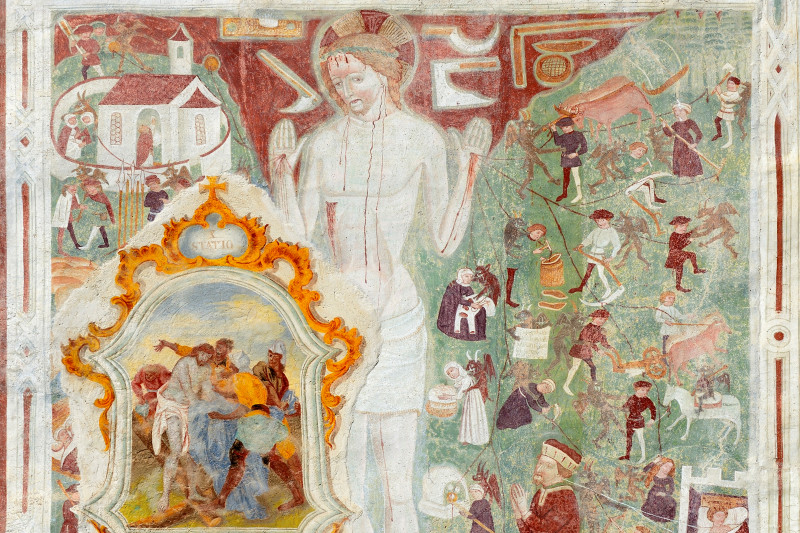
Kniha Genesis praví, že Hospodin přivedl k člověku všechna zvířata, aby viděl, jak je nazve. (Gn 2,19–20)
19.10.2026, RC Monitor 19/2026
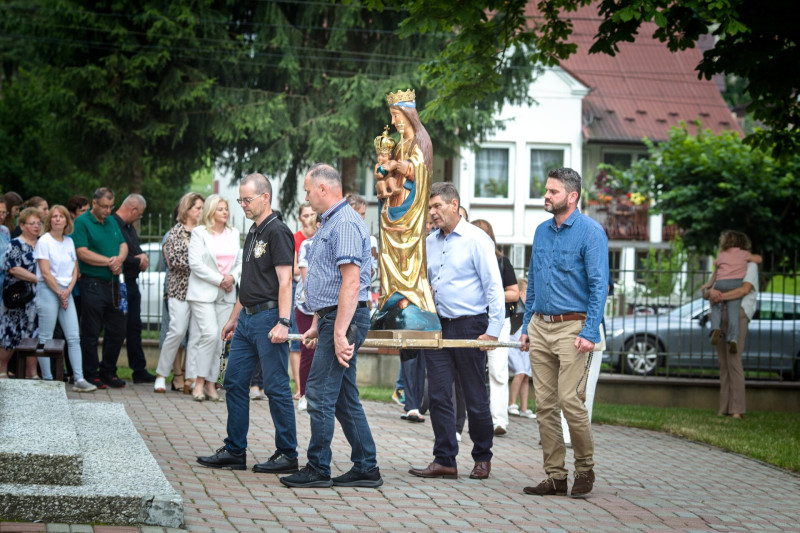
Začnu příběhem, který se skutečně odehrál při jednání katolické pastorační rady. Jeden farník v nejmenované farnosti navrhl uspořádat mariánské říjnové pobožnosti. Dříve bylo zvykem konat je každý den, nicméně jeho návrh byl daleko skromnější. Šlo by pouze o čtyři pobožnosti – každou neděli jedna. Struktura by byla jednoduchá a tradiční: mariánská píseň, růženec, litanie a mariánská píseň. Když se onen farník zeptal, jak na tento návrh pohlíží farní rada, dočkal se odpovědi: „Velmi pesimisticky!“
Články e-mailem
Nové články přímo
do vaší e-mailové schránky
Čtrnáctideník Monitor
Tištěný publicistický čtrnáctideník Monitor bude ve vaší poštovní schránce každý druhý pátek. Zasílání je bezplatné a je hrazené výhradně z darů čtenářů.