
18.01.2008, NCR
Published on National Catholic Reporter Conversation Cafe (http://ncrcafe.org)
Ratzinger's 1990 remarks on Galileo
Cardinal Joseph Ratzinger
"The Crisis of Faith in Science”
Vydávání Monitoru je financováno výhradně z dobrovolných darů Vás, čtenářů. Budeme vděční, pokud se rozhodnete Monitor podpořit darem, abychom mohli v této službě pokračovat.
Extracts taken from A Turning Point for Europe? The Church and Modernity in the Europe of Upheavals, Paoline Editions, 1992, pp. 76-79. English translation by NCR.
* * *
In the last decade, creation’s resistance to allowing itself to be manipulated by humanity has emerged as a new element in the overall cultural situation. The question of the limits of science, and the criteria which it must observe, has become unavoidable.
Particularly emblematic of this change of intellectual climate, it seems to me, is the different way in which the Galileo case is seen.
This episode, which was little considered in the 18th century, was elevated to a myth of the Enlightenment in the century that followed. Galileo appeared as a victim of that medieval obscurantism that endures in the Church. Good and evil were sharply distinguished. On the one hand, we find the Inquisition: a power that incarnates superstition, the adversary of freedom and conscience. On the other, there’s natural science represented by Galileo: the force of progress and liberation of humanity from the chains of ignorance that kept it impotent in the face of nature. The star of modernity shines in the dark night of medieval obscurity.
Today, things have changed.
According to [Ernst] Bloch, the heliocentric system - just like the geocentric - is based upon presuppositions that can’t be empirically demonstrated. Among these, an important role is played by the affirmation of the existence of an absolute space; that’s an opinion that, in any event, has been cancelled by the Theory of Relativity. Bloch writes, in his own words: ‘From the moment that, with the abolition of the presupposition of an empty and immobile space, movement is no longer produced towards something, but there’s only a relative movement of bodies among themselves, and therefore the measurement of that [movement] depends to a great extent on the choice of a body to serve as a point of reference, in this case is it not merely the complexity of calculations that renders the [geocentric] hypothesis impractical? Then as now, one can suppose the earth to be fixed and the sun as mobile.”
Curiously, it was precisely Bloch, with his Romantic Marxism, who was among the first to openly oppose the [Galileo] myth, offering a new interpretation of what happened: The advantage of the heliocentric system over the geocentric, he suggested, does not consist in a greater correspondence to objective truth, but solely in the fact that it offers us greater ease of calculation. To this point, Bloch follows solely a modern conception of natural science. What is surprising, however, is the conclusion he draws: "Once the relativity of movement is taken for granted, an ancient human and Christian system of reference has no right to interference in astronomic calculations and their heliocentric simplification; however, it has the right to remain faithful to its method of preserving the earth in relation to human dignity, and to order the world with regard to what will happen and what has happened in the world.”
If both the spheres of conscience are once again clearly distinguished among themselves under their respective methodological profiles, recognizing both their limits and their respective rights, then the synthetic judgment of the agnostic-skeptic philosopher P. Feyerabend appears much more drastic. He writes: "The church at the time of Galileo was much more faithful to reason than Galileo himself, and also took into consideration the ethical and social consequences of Galileo’s doctrine. Its verdict against Gaileo was rational and just, and revisionism can be legitimized solely for motives of political opportunism.”
From the point of view of the concrete consequences of the turning point Galileo represents, however, C.F. Von Weizsacker takes another step forward, when he identifies a "very direct path” that leads from Galileo to the atomic bomb.
To my great surprise, in a recent interview on the Galileo case, I was not asked a question like, ‘Why did the Church try to get in the way of the development of modern science?’, but rather exactly the opposite, that is: ‘Why didn’t the church take a more clear position against the disasters that would inevitably follow, once Galileo had opened Pandora’s box?’
It would be absurd, on the basis of these affirmations, to construct a hurried apologetics. The faith does not grow from resentment and the rejection of rationality, but from its fundamental affirmation and from being inscribed in a still greater form of reason ...
Here, I wished to recall a symptomatic case that illustrates the extent to which modernity’s doubts about itself have grown today in science and technology.
23.10.2026, RC Monitor 19/2026
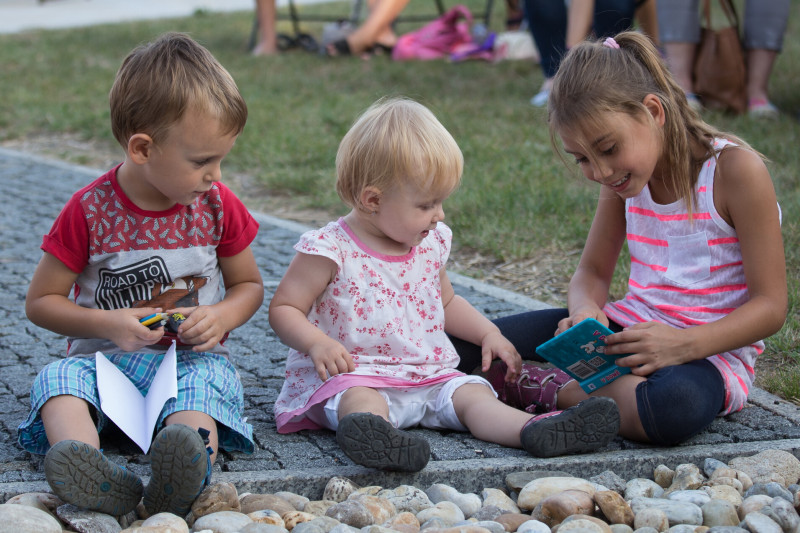
Občas se dívám na televizi, hlavně pozdě večer, když nemůžu spát, ale není to moudrý zvyk. Filmy nebo seriály jsou prošpikovány reklamami, které trvají tak dlouho, že zapomenete, na co jste se dívali. Jediné, co z tohoto zlozvyku dobrého vyplývá, že mohu, jak se dříve říkávalo, držet prst na tepu doby. Výmluvné jsou hlavně reklamy, kde účinkují děti.
21.10.2026, RC Monitor 19/2026
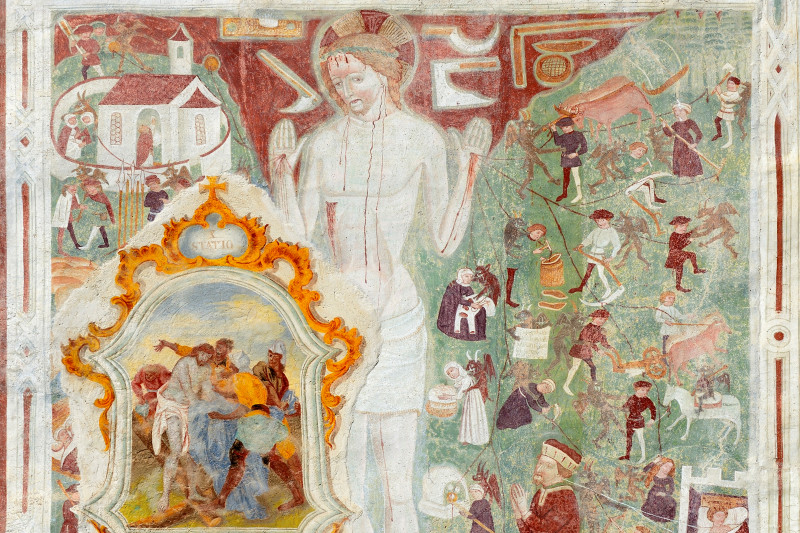
Kniha Genesis praví, že Hospodin přivedl k člověku všechna zvířata, aby viděl, jak je nazve. (Gn 2,19–20)
19.10.2026, RC Monitor 19/2026
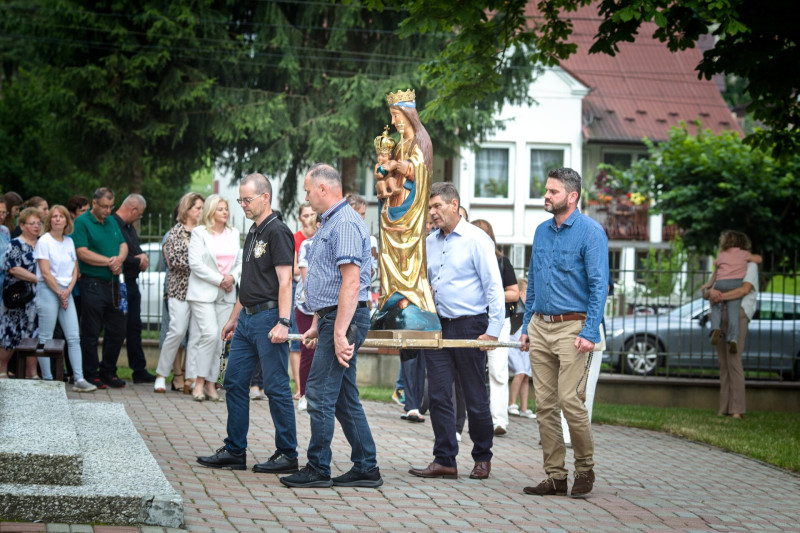
Začnu příběhem, který se skutečně odehrál při jednání katolické pastorační rady. Jeden farník v nejmenované farnosti navrhl uspořádat mariánské říjnové pobožnosti. Dříve bylo zvykem konat je každý den, nicméně jeho návrh byl daleko skromnější. Šlo by pouze o čtyři pobožnosti – každou neděli jedna. Struktura by byla jednoduchá a tradiční: mariánská píseň, růženec, litanie a mariánská píseň. Když se onen farník zeptal, jak na tento návrh pohlíží farní rada, dočkal se odpovědi: „Velmi pesimisticky!“
Články e-mailem
Nové články přímo
do vaší e-mailové schránky
Čtrnáctideník Monitor
Tištěný publicistický čtrnáctideník Monitor bude ve vaší poštovní schránce každý druhý pátek. Zasílání je bezplatné a je hrazené výhradně z darů čtenářů.